
Montana’s climate presents unique challenges for tree pruning, with cold winters, late spring frosts, and significant elevation changes across the state. A trimming schedule that works in Missoula may cause damage in Bozeman or Billings.
The best time to trim trees depends on the species, your location, and the specific goals you have for the tree. Some trees tolerate pruning almost year-round while others face serious disease risks if cut during the wrong season.
Temperature, sap flow, and insect activity all influence how a tree responds to pruning cuts. Knowing these factors helps you avoid mistakes that weaken trees or leave them vulnerable to pests and disease.
General Pruning Window for Most Trees
Most deciduous trees in Montana respond well to pruning during a specific window that balances tree health with practical access. Cutting outside that window does not always harm the tree, but it increases the risk of stress, disease, and poor wound closure.
Late Winter to Early Spring
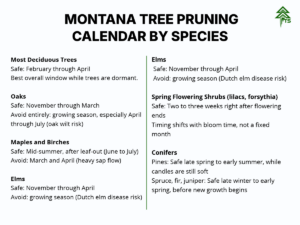
The period from February through April is the preferred window for most deciduous trees in Montana. Trees remain dormant during this time, which means they experience less stress from pruning cuts.
Energy reserves sit in the roots and trunk rather than fueling new leaves, so the tree can direct resources toward sealing wounds. Frozen or barely thawed soil also means foot traffic and equipment cause less compaction damage around the root zone.
Why Dormancy Matters
Pruning while trees are dormant allows wounds to begin sealing before insects and pathogens become active in spring. Without leaves, the branch structure is also easier to see, making it simpler to identify dead, crossing, or problematic limbs.
Decay fungi spread more slowly in cold temperatures, so cuts made in February face less risk of infection than cuts made in May.
What Happens If You Prune Too Early
Pruning in December or January during a severe cold snap can cause dieback around the wound. The wood is frozen and brittle, and the cut surface may crack instead of slicing cleanly.
Trees cannot seal wounds when temperatures remain below freezing for extended periods, leaving exposed tissue vulnerable until spring.
What Happens If You Prune Too Late
Waiting until May or June means the tree has already invested energy in producing leaves and extending new shoots. Pruning at that point forces the tree to restart growth using reserves it has already spent.
Insects are active by then, and fresh wounds attract borers and other pests looking for entry points.
Elevation Adjustments
Montana spans USDA hardiness zones 3 through 6, and elevation affects timing significantly. Low-elevation valley yards can be pruned earlier, while high-elevation mountain areas may need to wait until late April or early May to avoid late freezes.
A tree at 3,000 feet may be ready for pruning in mid-February while the same species at 6,000 feet should wait another six to eight weeks.
Trees That Need Special Timing
Several species common in Montana require specific timing to prevent disease, excessive sap flow, or the loss of next season’s flowers. Pruning at the wrong time for these trees can cause damage that takes years to correct or kill the tree outright.
Oaks
Oaks require strict timing to prevent oak wilt, a fungal disease that can kill red oaks within a single growing season. Prune oaks only during the dormant season, typically November through March, when sap beetles that spread the disease are inactive.
Never prune oaks during the growing season. Even a single cut made in spring or summer can attract the beetles that carry spores into the wound. If a storm breaks an oak branch during the growing season, seal the wound immediately with a pruning sealant and monitor the tree for signs of wilt.
Maples and Birches
These species bleed sap heavily if pruned in late winter or early spring. While the bleeding is not harmful to the tree, it can be unsightly. Prune maples and birches in mid-summer after leaf-out when sap flow stabilizes.
The tree has fully leafed out by then and sap pressure has dropped, so cuts produce minimal bleeding. Avoid pruning these species in March and April when sap is rising most aggressively.
Elms
Elms are vulnerable to Dutch elm disease and should only be pruned from November through April. Pruning during the growing season attracts beetles that carry the disease.
These beetles feed on fresh cuts and deposit fungal spores that block the tree’s vascular system. Once infected, an elm declines rapidly and usually dies within a few years. Stick to the dormant window and avoid any cutting outside it.
Spring Flowering Shrubs
Lilacs, forsythia, and other spring-blooming shrubs should be pruned immediately after they flower. If you prune them in late winter or early spring, you remove the flower buds and lose the season’s display.
These shrubs set their buds on old wood the previous year, so timing determines whether you get blooms at all. Prune within two to three weeks after the flowers fade to give the plant time to set new buds before fall.
Conifers
Pines should be pruned in late spring to early summer when new candles are elongating but still soft. Cutting candles at this stage controls shape without leaving stubs.
Spruces, firs, and junipers are best pruned in late winter to early spring before new growth begins. Avoid cutting into bare wood on conifers because most species cannot regrow from old wood. Once a branch is removed past the green growth, it stays gone.
When to Avoid Pruning
Certain times of year put trees at risk regardless of species. Cutting during these windows can weaken trees, attract pests, or leave wounds exposed to conditions that slow healing.
| Time Period | Why to Avoid |
| Below -10 to -15 degrees Fahrenheit | Wood is brittle and wounds cannot seal |
| Active spring bud break | Wood is tender and tree is investing energy in new growth |
| Late summer and fall | Stimulates tender growth that won’t harden before winter |
| During disease-risk windows for specific species | Oaks and elms face infection risk from beetles |
During Extreme Cold
Avoid pruning when temperatures drop below -10 to -15 degrees Fahrenheit. Wood becomes brittle at these temperatures and cuts may cause more damage than intended.
The wound also cannot seal while the tissue remains frozen, leaving it exposed for an extended period.
During Active Spring Growth
The period when buds are breaking and new leaves are emerging is a poor time for pruning. The wood is tender and prone to tearing, and the tree is investing energy in new growth rather than healing wounds.
Cuts made during this stage often heal unevenly and leave the tree more vulnerable to disease.
In Late Summer and Fall
Pruning in late summer or fall can stimulate tender new growth that will not harden off before winter. This new growth is vulnerable to cold damage.
Fresh cuts also heal slowly in fall, increasing the risk of decay organisms entering the wound.
Pruning Techniques
Proper technique determines whether a pruning cut heals cleanly or becomes a permanent entry point for decay. Trees do not regenerate tissue the way animals do, so every cut creates a wound the tree must seal off from the inside.
Where to Make the Cut
The branch collar is the swollen area where a branch meets the trunk, and it contains cells that seal wounds efficiently. The branch bark ridge is the raised line of bark on the upper side of that junction.
A correct cut starts just outside the branch bark ridge and angles down and slightly away from the trunk, leaving the collar intact .
Cuts to Avoid
Flush cuts remove the branch collar entirely and leave a large wound the tree cannot close properly. Stub cuts leave a section of branch that dies back and invites insects and disease.
Both mistakes create permanent openings that decay organisms exploit for the life of the tree.
The Three Cut Method for Large Branches
Branches thicker than about two inches need three separate cuts to prevent bark tearing. The first cut is an undercut made one to two feet from the trunk, cutting about a third of the way through the underside.
The second cut removes the bulk of the branch a few inches further out, leaving a stub. The final cut removes that stub just outside the branch collar .
Thinning Cuts Versus Heading Cuts
Thinning is the preferred method for structural pruning on mature trees, while heading works for shaping hedges or encouraging fullness in shrubs.
- Thinning removes an entire branch back to its point of origin and opens the canopy without changing the tree’s overall shape.
- Heading removes only the end of a branch and stimulates dense new growth below the cut.
When Wound Sealant Helps
Most pruning cuts do not need sealant, and applying it can actually trap moisture and interfere with natural sealing. The exception involves oaks and elms during disease-risk periods, where immediate wound dressing can block beetle-transmitted pathogens from entering.
For these species, seal any wound created during the growing season without delay.
Special Considerations for Montana
Montana’s climate adds layers of complexity that gardeners in milder regions do not face. Late frosts, dry summers, and sharp differences between valleys and mountains all affect how trees respond to pruning.
Late Frost Risk
Montana’s mountain valleys and eastern plains often experience late spring frosts. Major structural pruning that stimulates new growth should wait until after the last expected frost.
A warm stretch in March can trigger early bud break, and a freeze in April can kill that new growth. Check your local frost dates and watch the forecast before scheduling any significant cuts.
Dry Conditions
Western Montana can experience dry summers, and pruning during drought stress adds additional strain to trees. Water trees deeply before pruning if conditions have been dry.
A tree with adequate soil moisture recovers from cuts faster and seals wounds more effectively than one already struggling for water.
Local Microclimates
A yard in Billings may have different pruning timing than one in Missoula or Bozeman. Pay attention to your local conditions and adjust the general guidelines accordingly.
South-facing slopes warm earlier than north-facing ones, and wind exposure can change how quickly a tree breaks dormancy.
Conclusion
The best time to trim most trees in Montana falls between February and April, while trees are still dormant. Oaks, maples, birches, and elms each have specific timing requirements to prevent disease or excessive sap flow.
Avoid pruning during extreme cold, active spring growth, and late summer or fall. Proper technique matters as much as timing, so make cuts outside the branch collar and use the three cut method for larger limbs.
Match your tools to the branch size and never cut more than the tree can seal in one season. When in doubt, consult a certified arborist familiar with Montana’s growing conditions.
Related Posts
What Is Tree Topping?
Tree topping is the practice of cutting off the upper [...]
What to Do If a Tree Falls on Your House
If a tree falls on your house, prioritize everyone’s safety, [...]
Cheapest Time of Year to Have a Tree Cut Down
Tree removal costs vary significantly based on when the work [...]

How Much Does Land Clearing Cost in Montana?
Land clearing in Montana typically costs between $500 and $5,000 [...]
Categories