
If a tree falls on your house, prioritize everyone’s safety, stay away from dangerous areas and downed power lines, document the damage, contact your insurance company, and have qualified professionals handle the tree removal and necessary repairs. A fallen tree can cause serious structural, electrical, and water damage, so taking the right steps can help protect your family and property while the situation is assessed.
This article covers why trees fall, warning signs of hazardous trees, ways to reduce the risk, insurance considerations, and the types of damage a fallen tree can cause.
Why Trees Fall on Houses
Trees can fall on houses for several reasons, often due to severe weather, poor tree health, or weakened roots. Understanding these causes can help homeowners reduce the risk of property damage.
- Strong Winds and Storms: Powerful winds can uproot trees or snap trunks and branches.
- Heavy Rain and Saturated Soil: Waterlogged soil weakens root stability, making trees more likely to topple.
- Lightning: Lightning strikes can split trunks, damage internal tissues, or weaken a tree’s structure.
- Disease and Decay: Fungal infections and internal rot can weaken trunks and roots.
- Weak or Damaged Branches: Brittle, dead, or broken branches may fall onto roofs during storms.
- Root Damage: Construction, soil erosion, and root decay can compromise a tree’s ability to remain upright.
- Age and Structural Weakness: Older trees with weakened trunks, unbalanced canopies, or poor structural growth are more vulnerable to falling.
Recognizing the common causes of tree failure helps homeowners identify potential hazards and take preventive measures to protect their homes.
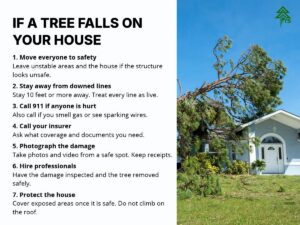
What to Do If a Tree Falls on Your House: A Step-by-Step Guide
When a tree falls on your house, it can cause significant structural damage, expose your home to the elements, and create serious safety hazards. Knowing how to respond can help protect your family, prevent further damage, and make the insurance and repair process more manageable.
1. Prioritize Everyone’s Safety
Immediately move everyone away from the damaged area and evacuate the house if the structure appears unstable. Stay clear of sagging ceilings, cracked walls, broken windows, and areas where the roof may collapse.
2. Stay Away From Electrical Hazards
Fallen trees can damage power lines, electrical wiring, and other utility connections, creating a risk of electric shock or fire. Never touch fallen wires or attempt to disconnect damaged electrical equipment; contact the local electric utility or emergency services for assistance.
3. Call Emergency Services if Necessary
Contact emergency responders if anyone is injured, trapped, or facing immediate danger. If the house has severe structural damage, avoid re-entering until qualified professionals confirm that it is safe.
4. Contact Your Insurance Provider
Notify your home insurance company as soon as possible after ensuring everyone’s safety. Ask about your policy’s coverage for structural repairs, tree removal, debris disposal, temporary accommodation, and any documentation required to process your claim. Ask whether the insurer wants to inspect before the tree is removed, unless waiting is unsafe.
5. Document the Damage
Take photographs and videos of the fallen tree, damaged roof, broken windows, and affected belongings, provided you can do so without putting yourself at risk. Keep copies of receipts, repair estimates, and other relevant records to support your insurance claim and track recovery expenses.
6. Arrange a Professional Inspection
Hire a qualified contractor or structural engineer to assess the extent of the damage and determine which repairs are necessary. A professional tree removal service should also evaluate how to remove the tree safely, particularly if it is resting on the roof or entangled with electrical wires.
7. Prevent Further Damage
Once the area has been declared safe, take reasonable steps to protect exposed parts of the house from rain, wind, and additional damage. Temporary coverings may help prevent water intrusion, but avoid climbing onto a damaged roof or attempting to cut or move large sections of the tree yourself.
A tree falling on a house can be overwhelming, but taking the right steps can help reduce the risks and simplify the recovery process. By prioritizing safety, contacting the appropriate professionals, documenting the damage, and coordinating with your insurance provider, you can begin restoring your home more safely and efficiently.
Warning Signs That a Tree May Be Hazardous
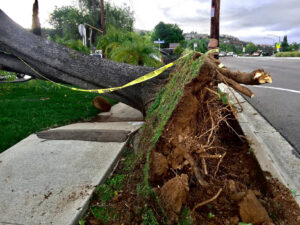
Trees can show several warning signs before they fall or drop large branches onto nearby homes. Recognizing these signs early can help homeowners address potential hazards and reduce the risk of property damage.
1. Dead or Hanging Branches
Dead or hanging branches can break off unexpectedly, especially during strong winds or heavy rain. They may indicate poor tree health or structural weakness.
2. Cracks and Splits
Deep cracks in the trunk or major branches can weaken the tree’s structure. These defects may increase the risk of branches breaking or the trunk splitting.
3. Cavities or Decay
Hollow areas and visible decay may indicate internal deterioration that compromises the tree’s strength. A professional assessment can help determine whether the tree poses a safety risk.
4. Mushrooms Near the Base
Mushrooms growing around the trunk or roots may indicate fungal activity and possible root decay. Although not all mushrooms signal a dangerous tree, their presence warrants closer inspection.
5. Significant Leaning
A tree that suddenly begins leaning or develops a new tilt may have unstable roots or a weakened base. Freshly disturbed soil around the trunk can indicate an increased risk of falling.
6. Exposed or Damaged Roots
Exposed, broken, or decaying roots can reduce a tree’s stability and ability to remain upright. Soil erosion and nearby construction can contribute to root damage.
7. Missing or Damaged Bark
Large areas of missing, loose, or damaged bark may indicate injury, disease, or declining tree health. Severe damage can weaken the trunk and make the tree more vulnerable to structural failure.
Regularly checking trees for these warning signs can help homeowners identify potential hazards before serious damage occurs. If a tree shows significant structural problems, consult a qualified arborist for a professional assessment.
How to Reduce the Risk of Tree Damage to Your Home
Trees provide shade, improve air quality, and enhance the beauty of a property, but poorly maintained or unhealthy trees can pose risks to nearby homes. Regular maintenance and proper planning can help homeowners reduce the likelihood of tree-related damage.
1. Regular Tree Inspections
Check trees regularly for dead branches, cracks, decay, and unusual leaning. Early detection helps identify potential hazards before they cause damage.
2. Appropriate Pruning
Trim branches that extend too close to roofs, windows, and other structures. Proper pruning also helps maintain a balanced canopy and reduces the risk of branch failure.
3. Remove Dead or Severely Compromised Branches
Dead, broken, or weakened branches can fall during strong winds and heavy rain. Have hazardous branches removed by a qualified professional to reduce the risk of property damage.
4. Monitor Tree Health
Watch for signs of disease, pest infestations, root damage, and declining growth. Providing appropriate care and addressing problems early can help maintain tree health and stability.
5. Seek Professional Assessment
Have a qualified arborist evaluate large, mature, leaning, or potentially hazardous trees near your home. Professional assessments can help determine whether a tree needs treatment, pruning, or removal.
6. Consider Tree Placement When Landscaping
Plant trees at suitable distances from houses, garages, fences, and utility lines, considering their expected height and canopy spread. Choosing appropriate species and locations can reduce future risks as trees mature.
Preventing tree-related home damage begins with regular inspections, responsible maintenance, and careful landscaping decisions. By addressing potential hazards early and seeking professional advice when needed, homeowners can protect their properties while maintaining healthy trees.
Who Pays for the Fallen Tree?
Who pays for a fallen tree depends on its origin, the cause of the fall, and whether negligence was involved. If a storm causes a tree to fall on your house, your homeowners insurance may cover the damage, depending on your policy. If the tree came from a neighbor’s property and their negligence contributed to the incident, they may be held responsible.
If no one was negligent, you may need to file a claim with your own insurer. Review your policy for coverage of repairs, tree removal, and debris cleanup, and document all damage to support your claim.
Understanding Tree-Related Home Insurance Coverage
Home insurance can help homeowners manage the financial impact of tree-related property damage, but coverage depends on the policy and the circumstances of the incident. Understanding the key details of your insurance can help you prepare for unexpected tree damage.
- How Coverage Can Vary: Coverage depends on your policy, the cause of the fall, and the damage sustained.
- Home Damage vs. Landscaping: Home repairs may be covered, while trees, plants, and landscaping may have limited protection.
- Debris Removal: Tree removal costs may be covered if the tree damages an insured structure, generally up to about $500 to $1,000, depending on the policy.
- Deductibles and Policy Limits: Deductibles and coverage limits affect how much insurance pays.
- Exclusions and Conditions: Some policies exclude certain damages or impose maintenance requirements.
- Reviewing Your Policy: Check your coverage and clarify exclusions with your insurer before severe weather occurs.
Understanding your tree-related insurance coverage can help you prepare financially for unexpected property damage. Reviewing your policy, deductibles, limits, and exclusions in advance can make the claims process less stressful.
The Potential Damage a Fallen Tree Can Cause
A fallen tree can cause extensive damage to a home, affecting its structure, safety, and overall functionality. The severity depends on the tree’s size, the force of impact, and the part of the property it strikes.
- Roof Damage: Breaks roofing materials and exposes the home to rain.
- Structural Damage: Cracks walls and damages beams or other supports.
- Broken Windows and Doors: Shatters glass and damages frames.
- Water Intrusion: Allows moisture inside, potentially causing mold growth.
- Electrical or Plumbing Damage: Damages wiring, pipes, and utility connections.
- Vehicle and Outbuilding Damage: Crushes cars, garages, sheds, and other structures.
- Landscape and Fence Damage: Destroys gardens, fences, and walkways.
- Temporary Displacement: Forces residents to leave while major repairs are completed.
A fallen tree can cause anything from minor exterior damage to major structural problems that require costly repairs. Understanding these potential consequences highlights the importance of tree maintenance, property preparedness, and appropriate insurance coverage.
Final Takeaway
A tree falling on your house can cause serious damage, safety hazards, and unexpected expenses. Understanding why trees fall, recognizing warning signs, and maintaining trees properly can help homeowners reduce these risks. Regular inspections, appropriate pruning, and preparing for severe weather are essential steps in protecting your property.
If a tree falls on your home, prioritize safety, seek professional assistance, and document the damage. Reviewing your home insurance policy in advance can also help you understand your coverage and potential costs. With proper preparation and responsible tree care, homeowners can better protect their families, homes, and finances from tree-related damage.
Related Posts
What Is Tree Topping?
Tree topping is the practice of cutting off the upper [...]
Cheapest Time of Year to Have a Tree Cut Down
Tree removal costs vary significantly based on when the work [...]
How Much Does Land Clearing Cost in Montana?
Land clearing in Montana typically costs between $500 and $5,000 [...]
When Is the Best Time to Trim Trees in Montana?
Montana's climate presents unique challenges for tree pruning, with cold [...]
Categories